
ABOUT
My personal project product is 3D Designed Sustainable house, it is a house made for a family of 4 and has been tailored to the Australian environment.
The exterior has been designed using a 3D modelling software called SketchUp and the interior (floor plan) has been designed using Planner5D.

PROCESS &PLANNING
I began my project by choosing a global context and research question. Globalisation & Sustainability: "How can various designs and materials affect the sustainability of a house?"
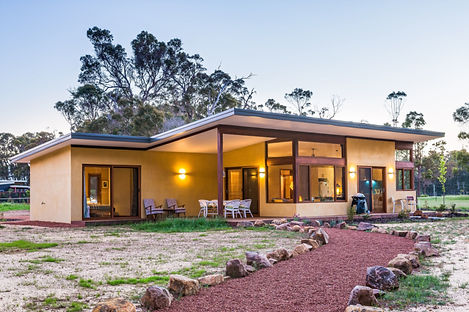
My research began by looking at certain features such as roofs and materials in terms of sustainability. This allowed me to get an idea of what my house should be made of and certain features it should have. I moved on to finding existing designs and analysing them to get a clear example of effective existing products. I looked at some of the most sustainable houses built in Australia including the Sativa Sanctuary Hemp house (top figure) and the Waramanga Rammed Earth House (bottom figure).
This all provided me with a solid foundation for my product and gave me lots of inspirations and ideas.

MOTIVATION & PERSONAL INTEREST
Over the years and my school career, I have always been interested in design. It was one of the subjects I always enjoyed and later in life realised it came as a natural talent.
I decided to go into 3D Design since it is a relatively new concept and is now extremely common in careers such as architecture. It interested me because I knew that if I managed to figure out how to use 3D modelling software, it could greatly helpmeet in future projects. In the past I had already worked 3D modelling software such as OnShape which allowed me utilise previously acquired skills and knowledge.
I am not sure if I will pursue a design career in the future but these skills will be useful nonetheless.

TAKING ACTION

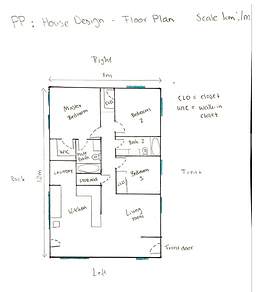

I began the creation of my product by creating sketches. I then chose certain designs and features that I felt fit best and created final sketches of both the floorplan and exterior of the house.
Once I finished the sketches, I digitalised my floorpan using Planner5D and began 3D modelling my final product using SketchUp. This phase was the most important in my entire project. I encountered ,multiple issues with soft are and even had to change programs multiple times, however it all ended up working out at the end of the day.
PRODUCT CRITERIA
Below is the original criteria I set for my product:
- It needs to be made out of environmentally friendly materials: recyclable, eco-friendly, easily accessible.
- It needs to have a sustainable design: its - features such as walls and the roof must contribute to its sustainability rate, e.g. the roof could have multiple functions such as run off for debri and heat protection
- It needs to fit a family of four: 3 bedrooms, 2 bathrooms, a kitchen, a living room and plenty of storage space (closets and walk-in closets)
- It needs to be realistic and show a product that could actually be made in real life: not too expensive with a realistic design
- Must fit its environment : the design I create must not ruin or disturb the surroundings (in terms of colourway, material, location, site impact etc.)
My product has managed to meet every single one of these criteria strands

ABOUT ME
